
There is another version of the coast waiting after everyone else goes home.
The Quiet Comes First
The first thing you notice is what you don’t hear.
There are no beach chairs scraping across the sand. No children calling to one another near the water. No music drifting down from an open balcony or cars moving slowly along the road looking for somewhere to park.
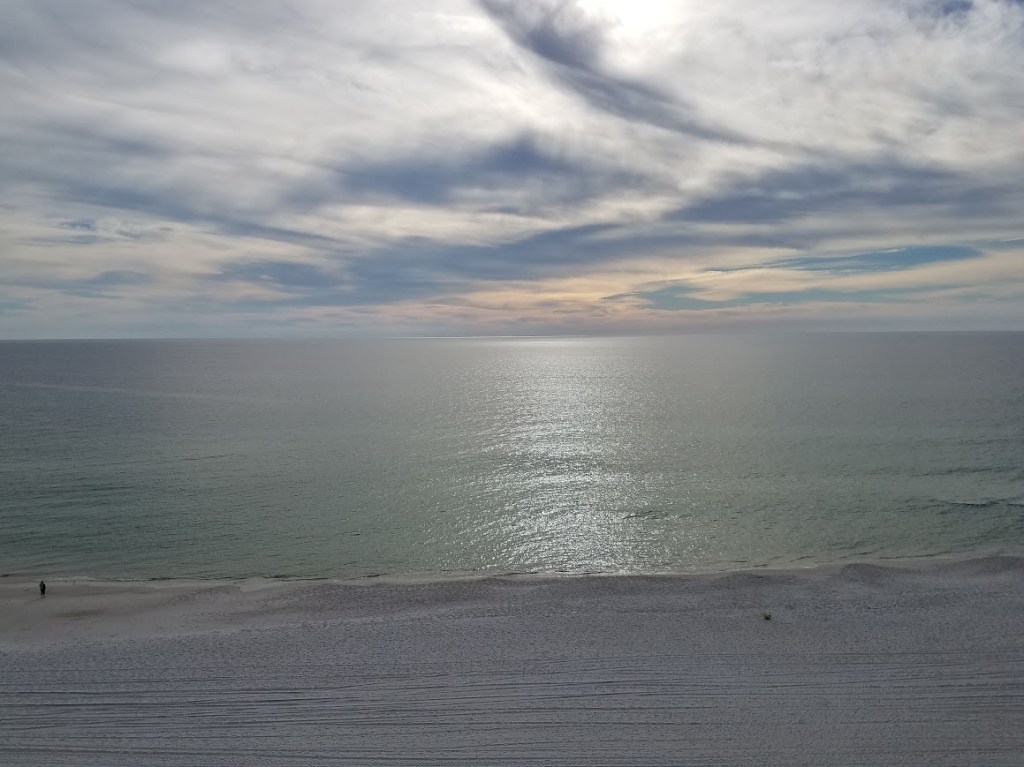
Just the waves. The wind. Maybe one person walking near the shoreline with nowhere they need to be.
This is the version of the beach town most people never meet.
By summer, it will belong to everyone again. Families will carry umbrellas toward the water. Restaurants will fill before sunset. Surf shops will leave their doors open, and the beach bars will stay loud well into the night.
But for a little while in winter, the town settles back into itself. The sand stretches out untouched. The Gulf keeps moving as if the season never mattered. And the few people who remain seem to understand that the quiet isn’t something missing.
It’s the reason to be there.
A Town Without an Audience
Beach towns spend most of the year getting ready for someone else.
They straighten the rows of chairs each morning. They fill coolers with ice, stack T-shirts near the front windows, and write the day’s drink specials on chalkboards facing the road. Everything is arranged around the people who are coming.
Then winter arrives, and almost nobody does.
The souvenir shops are still there. So are the miniature golf courses, seafood restaurants, and sun-faded signs promising cold drinks just beyond the dunes. But without the traffic and music surrounding them, they feel less like attractions and more like pieces of a town that has finally stopped performing.
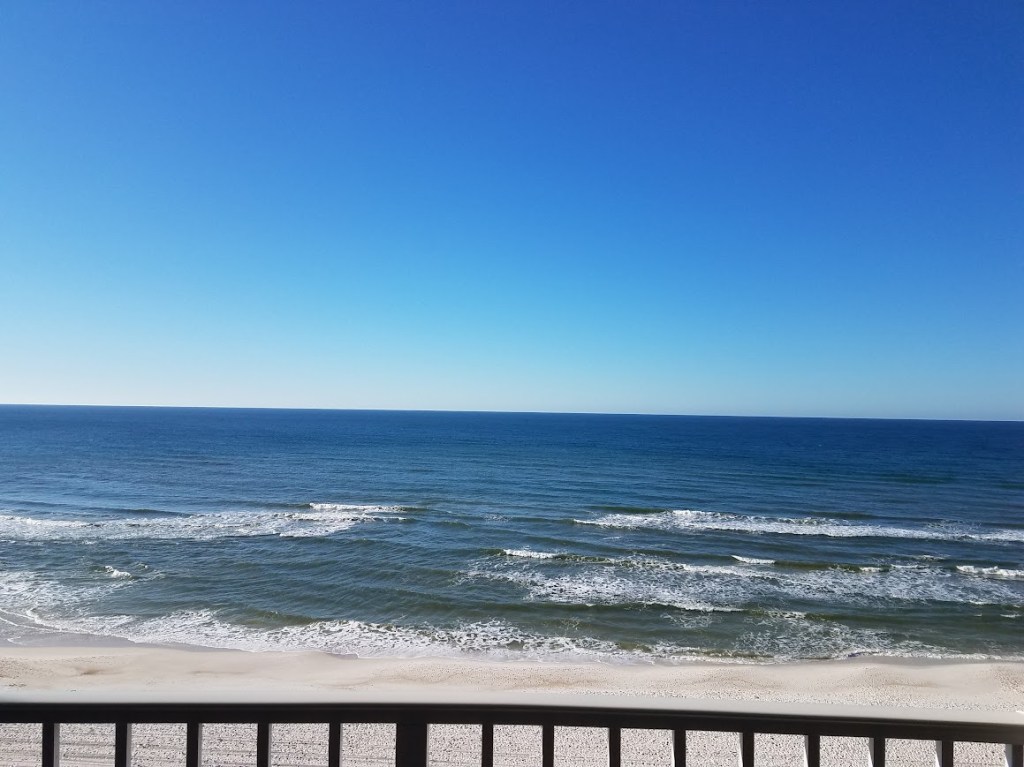
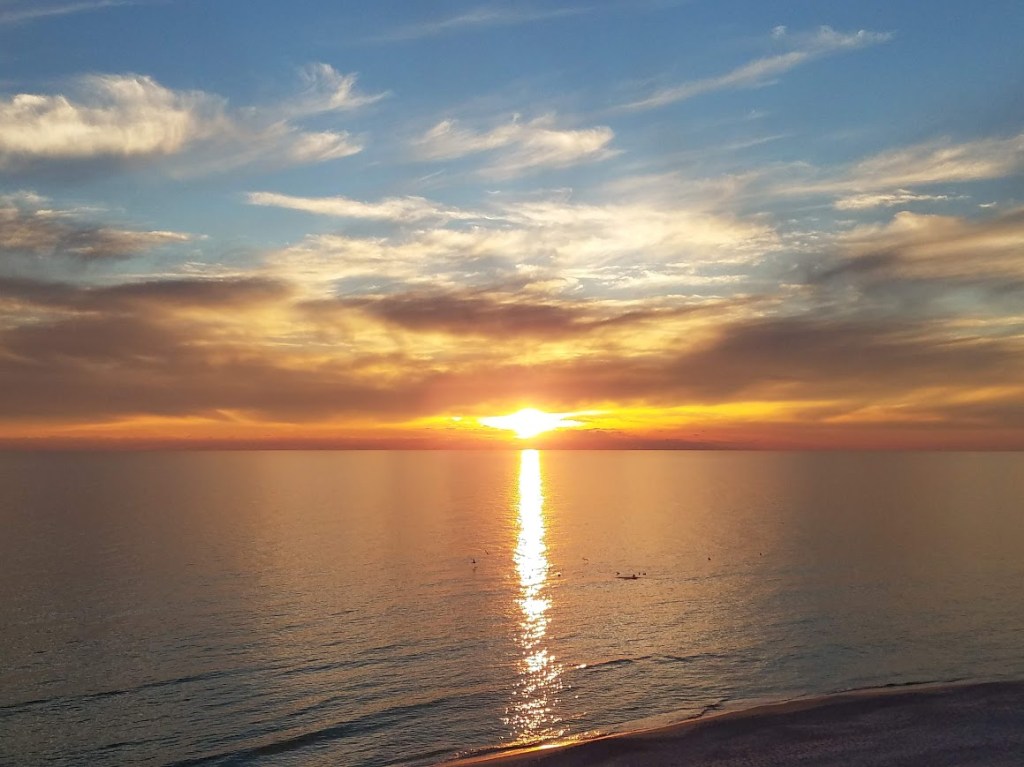
From a balcony above the beach, the Gulf looks much the same as it does in July. The waves still arrive in rows. The morning sky still turns blue. What changes is everything around it.
There is room to notice the place itself.
Not the vacation version. Not the one waiting in photographs or advertisements. The real one—the town beneath the season, carrying on quietly until everyone returns.
What the Quiet Lets You See
When a beach is crowded, you notice people.
You notice the family searching for enough open sand to spread out a blanket. The child running toward the water before anyone can finish applying sunscreen. The group dragging a cooler that looked much lighter back at the condominium.
When the beach is empty, you notice everything else.
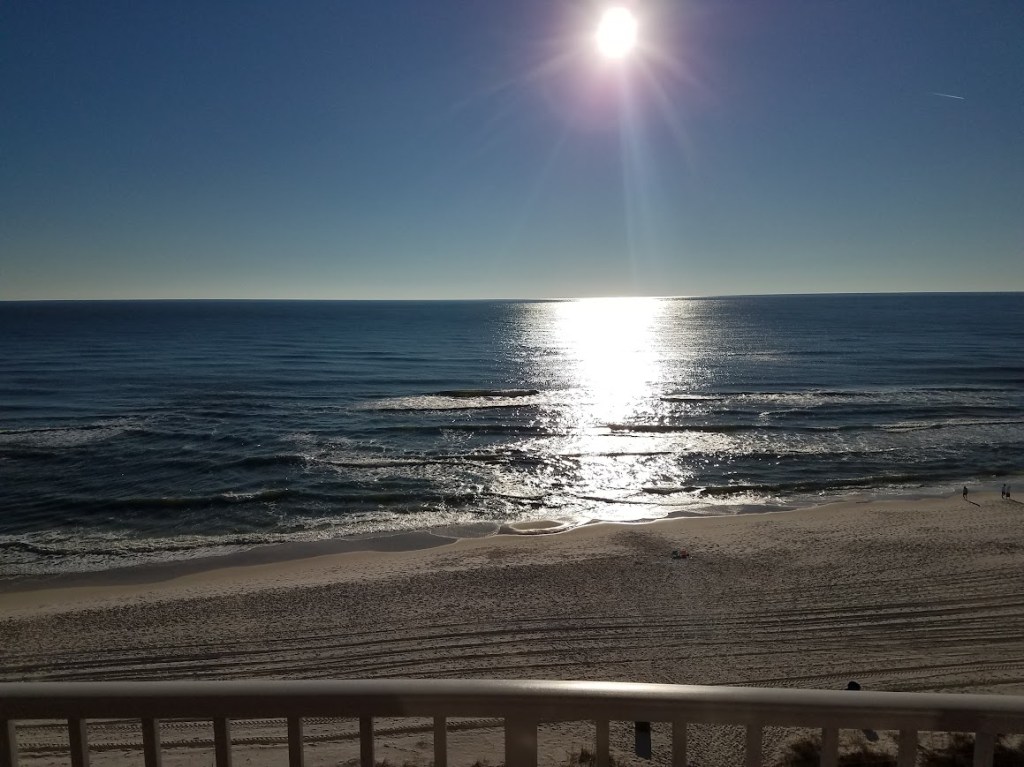
You see the clean lines left behind by the machine that passed over the sand that morning. You notice how the water changes color beneath the clouds. You watch one set of footprints travel along the shoreline until they become too small to follow.
Even the sound of the waves feels different when it doesn’t have to compete with anything.
Savannah offers the same lesson when you finally start looking up: places reveal themselves when you stop moving through them like a checklist. The details were always there. Most of the time, we were simply moving too quickly to see them.
That may be what the offseason gives back to a beach town. Not emptiness, exactly.
Attention.
The People Who Stay
Of course, the town isn’t truly empty.
People still wake up and go to work. Someone unlocks the restaurant that won’t need every table tonight. Someone walks the beach before beginning the rest of the day. Fishing boats leave whether tourists are watching or not.
For the people who live there, winter isn’t an interruption. It may be the closest the town comes to an ordinary life.
There are familiar faces at the counter again. Parking spaces near the door. Conversations that don’t have to compete with a crowded room. The people behind the bar have time to finish a story before someone needs another drink.
Maybe that’s when a beach town feels most like a town.
Not when every room is occupied and every neon sign is glowing, but when the people who remain begin recognizing one another again. When the place belongs less to an industry and more to the lives being lived inside it.
Summer shows you what a beach town does.
Winter shows you who it is.
The Beach We Carry Home
Most beach vacations are remembered in pieces.
A restaurant where everyone was sunburned and hungry. Sand in the floorboards of the car. Towels hanging from every available chair. The long walk back from the water carrying twice as much as you brought.
Those memories matter. They become family stories, even when nothing especially important happened.
But the quieter trips stay with us differently.
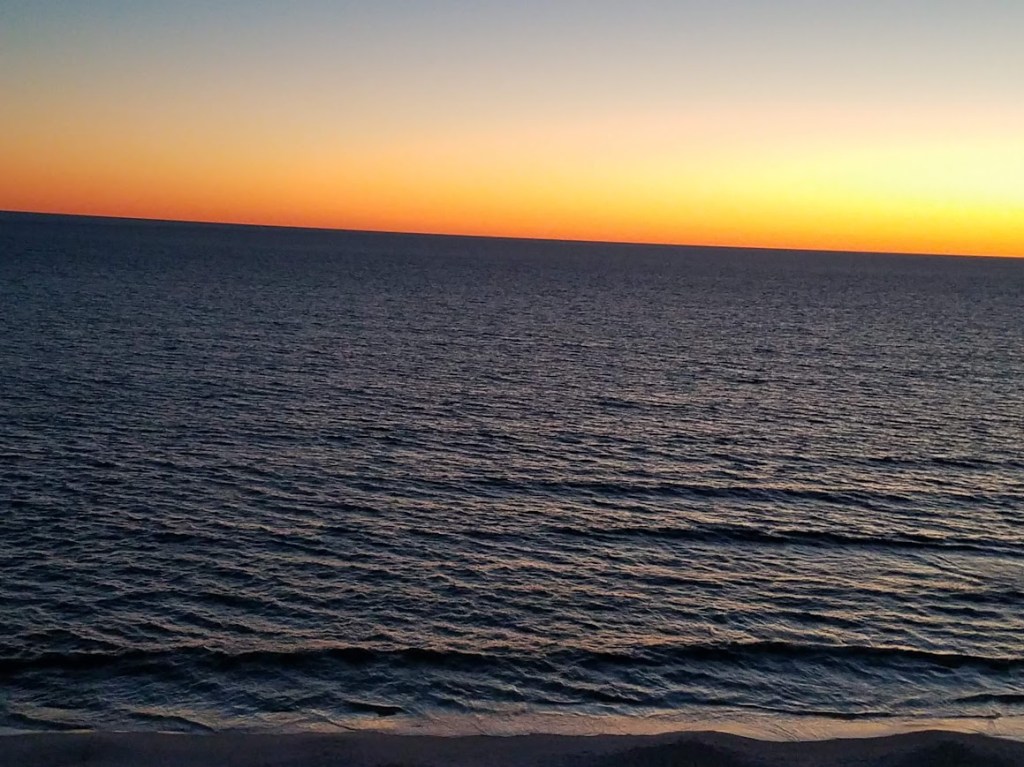
You remember standing at the window before anyone else was awake. You remember the beach without footprints. The color of the sky just before the sun disappeared. A single person walking near the water with the whole shoreline available to them.
There was no event to preserve. Nothing happened that needed to be photographed or retold.
And yet, years later, that may be the moment you can still see most clearly.
Maybe the places that remain with us always exist somewhere between where we traveled and what we carried home. Time removes the crowds and noise. What survives is usually something smaller.
The light. The water. The feeling that, for a few minutes, there was nowhere else you needed to be.
When It Belongs to Itself Again
By spring, the town will begin waking up.
Balconies will fill. Restaurants will reopen every section. Surf shops will roll racks of shirts onto the sidewalk, and the first warm weekends will bring traffic back to the road.
That version of the beach town has its own kind of joy. It is loud, familiar, and full of the memories people came there to make.
But the quieter version deserves to be remembered too.
The one beneath a January sky. The one with empty sand and plenty of room at the counter. The one that doesn’t ask you to do anything except stand still and listen to the water.
For a little while, the beach town belongs to itself again.
And if you arrive at the right time, it may let you belong there too.
 Deedlebay