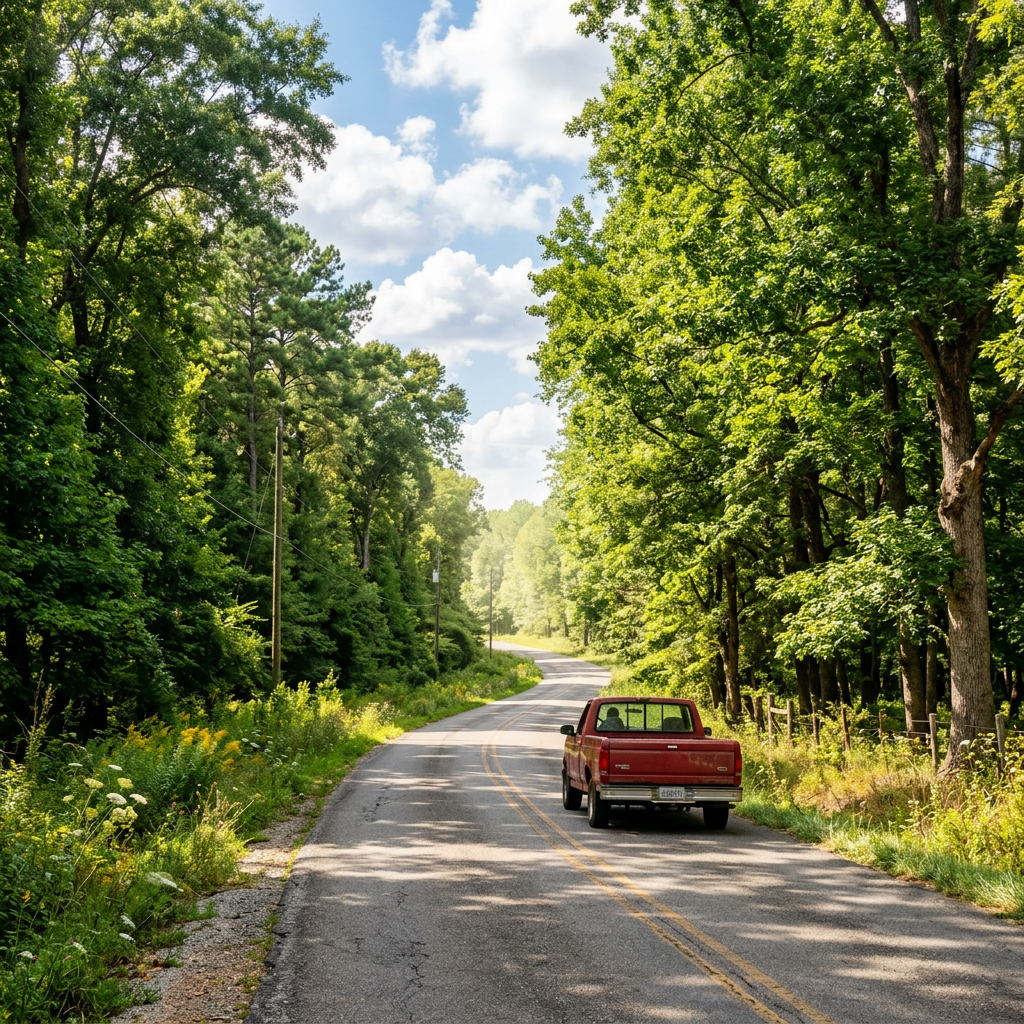
Nothing ever beat a Saturday road trip.
The windows were down, the sky was impossibly blue, and somewhere in the distance the smell of fresh-cut grass drifted through the car. Classic rock crackled through the speakers while two-lane roads stretched toward places that didn’t seem to be in any hurry to change.
Along the way, there were small towns where front porches still mattered, where sweet tea was poured without asking, and where the smell of backyard grills filled the afternoon air. Towns where dads stood over charcoal smokers and hamburgers sizzled in the summer heat. Towns that seemed to move at the same pace as those long Saturday afternoons we remember so well.
The South still has a few places like that.
In no particular order, these are ten Southern towns that still feel like Saturday afternoon.
Savannah, Georgia
If Saturday afternoon had a capital city, Savannah might be it.
There are plenty of reasons people visit Savannah, but the best part of the city has never been a specific attraction. It’s the feeling that settles over you once you stop trying to get anywhere.
Find a bench in one of the city’s historic squares and sit for a while. Spanish moss hangs from the live oaks overhead, the air feels thick with humidity, and the pace of life seems just a little slower than everywhere else. People stroll instead of rush. Conversations linger. Nobody appears to be in much of a hurry.
Savannah reminds me of the best part of a summer road trip—the moment when you pull off the highway and realize there’s no reason to check the clock. You simply walk. Around the next corner is another square, another shaded street, another reminder that some places still understand the value of taking your time.
If Saturday afternoon is about slowing down long enough to notice the world around you, Savannah may be one of the last places that still does it naturally.
Bluffton, South Carolina
Some towns make you want to explore. Bluffton makes you want to stay awhile.
Tucked along the South Carolina Lowcountry, Bluffton feels like the front porch version of Saturday afternoon. It isn’t trying to impress anyone, and that’s part of its charm. The crowds that have found so many Southern destinations seem to pass right by, leaving behind a town that still feels comfortable in its own skin.
There is a quietness to Bluffton that is becoming harder to find. Live oaks provide shade from the Southern sun, conversations seem to last a little longer, and the pace of the day feels dictated more by the weather than by the clock. Even the scent of the nearby marsh seems to encourage people to slow down and settle in.
If Savannah is the place where you wander without a destination, Bluffton is the place where you pull up a chair and stay for another glass of sweet tea. It reminds us that some of life’s best afternoons aren’t spent doing anything remarkable at all. They’re spent on a porch, watching the world move a little slower than usual.
Tybee Island, Georgia
Not every Saturday afternoon is spent on a porch or beneath the shade of live oaks. Some are spent with sand on your feet, salt in the air, and nowhere in particular you need to be.
That’s what Tybee Island feels like.
Unlike many beach destinations that seem determined to reinvent themselves every few years, Tybee has managed to hold onto much of its weathered character. The island still feels approachable, the kind of place where flip-flops are considered acceptable almost everywhere and the best plans often involve no plans at all.
The smell of salt air follows you from the beach to the local seafood spots, and the pace of life seems to move with the tides rather than the clock. There is a laid-back authenticity to Tybee that feels increasingly rare, as if the island quietly decided long ago that there was no reason to rush through a perfectly good afternoon.
Tybee reminds me of the coastal version of a Saturday road trip. You arrive without much of an agenda, spend the day wandering wherever the breeze takes you, and leave with little more than sun on your skin and a memory that somehow feels bigger than the day itself.
Franklin, Tennessee
Every Southern town seems to have a place where people naturally gather. In Franklin, it’s the square.
Surrounded by old brick buildings and sidewalks that invite you to slow down, downtown Franklin feels like a reminder of what many communities used to be before everything became bigger, faster, and farther apart. People linger outside shops, conversations spill onto the sidewalks, and a simple walk around the square can easily take twice as long as you planned.
Just a short drive from Nashville, Franklin offers something entirely different. While Nashville moves to the rhythm of a growing city, Franklin seems content to move at its own pace. It feels less concerned with what’s next and more interested in what’s happening right now.
What stands out most isn’t a specific attraction. It’s the sense of community. Friends stop to talk. Families stroll without much of a destination. Visitors quickly find themselves doing the same. There is a feeling that people still know how to spend an afternoon here.
If Savannah is about wandering and Bluffton is about lingering, Franklin is about gathering. It’s the town square version of Saturday afternoon—a place where the simple act of walking around and talking with people is still enough.
Helen, Georgia
Not every Saturday afternoon is quiet.
Some are spent floating down a river with friends, laughing about absolutely nothing, and hoping the day lasts a little longer than it should.
That’s the feeling Helen brings back for me.
Nestled in the North Georgia mountains, Helen feels a little different from the other towns on this list. With its alpine-inspired buildings, walkable streets, and mountain scenery, it has a personality all its own. But what makes Helen memorable isn’t just how it looks—it’s how it makes people feel.
For many visitors, the memories are made on the river. Tubing through town on a warm afternoon has become a tradition for generations of families and friends. The pace is slow, the mood is relaxed, and the goal is simple: enjoy the day while it lasts. Afterward, people wander through the shops, grab something to eat, and continue stretching the afternoon a little longer.
Helen reminds me that some of our best memories aren’t tied to a place at all. They’re tied to the people we were with. If Savannah is about slowing down and Franklin is about community, Helen is about friendship—the kind of Saturday afternoon that leaves you sunburned, smiling, and wishing tomorrow wasn’t Sunday.
Beaufort, South Carolina
Some towns make you want to keep moving. Beaufort makes you want to find a shady spot and stay awhile.
Set along the South Carolina coast, Beaufort feels like the kind of place that understands there is no prize for rushing through an afternoon. Live oaks stretch overhead, their branches draped in Spanish moss, while the waterfront invites visitors to slow their pace and take in the view. It is the sort of town that seems perfectly content to let the day unfold on its own schedule.
Like many of the best Southern towns, Beaufort doesn’t overwhelm you with noise or distractions. Instead, it wins you over gradually. A walk along the waterfront. A quiet conversation on a shaded bench. The sight of sunlight filtering through centuries-old oak trees. Before long, you find yourself doing exactly what the town seems to encourage—slowing down.
There is something comforting about places that have learned how to age gracefully, and Beaufort is one of them. It carries its history lightly and wears its coastal character naturally. Nothing feels forced. Nothing feels rushed.
If Bluffton is the front porch version of Saturday afternoon, Beaufort is the shade of the old oak tree—a place where the best thing you can do is sit for a while and watch the world pass by.
Apalachicola, Florida
Some Saturday afternoons are spent near the water, watching boats come and go while time seems to slow with the tide.
That’s the feeling Apalachicola brings to mind.
Located along Florida’s Forgotten Coast, Apalachicola feels like a reminder of the Gulf Coast before high-rise condos and crowded boardwalks became the norm. Shrimp boats still line the waterfront, seafood remains part of the town’s identity, and the pace of life feels connected to the rhythms of the bay rather than the demands of a busy schedule.
There is an authenticity to Apalachicola that is becoming increasingly rare. The historic buildings, working docks, and waterfront streets tell the story of a town that hasn’t forgotten where it came from. It feels less like a destination designed for visitors and more like a place that simply continued being itself while the rest of the world sped up.
Perhaps that’s why so many people are drawn to places like this. Standing near the docks, watching the water and listening to the sounds of a working harbor, it’s easy to remember that some of the best afternoons don’t require much at all. Just a little sunshine, a light breeze off the water, and nowhere else you need to be.
If Beaufort is the shade of the old oak tree, Apalachicola is the fishing dock—a place where you pull up a seat, watch the tide roll in, and let the afternoon unfold at its own pace.
Fairhope, Alabama
Some Saturday afternoons aren’t about where you’re going. They’re about finding a place to sit and watching the day slowly come to an end.
That’s the feeling Fairhope seems to capture.
Perched along the eastern shore of Mobile Bay, Fairhope has earned a reputation as one of the South’s most charming small towns, but its appeal goes beyond flower-lined streets and a walkable downtown. There is a calmness here that feels increasingly difficult to find. The kind of calmness that encourages people to slow down, linger a little longer, and appreciate the simple beauty of an ordinary afternoon.
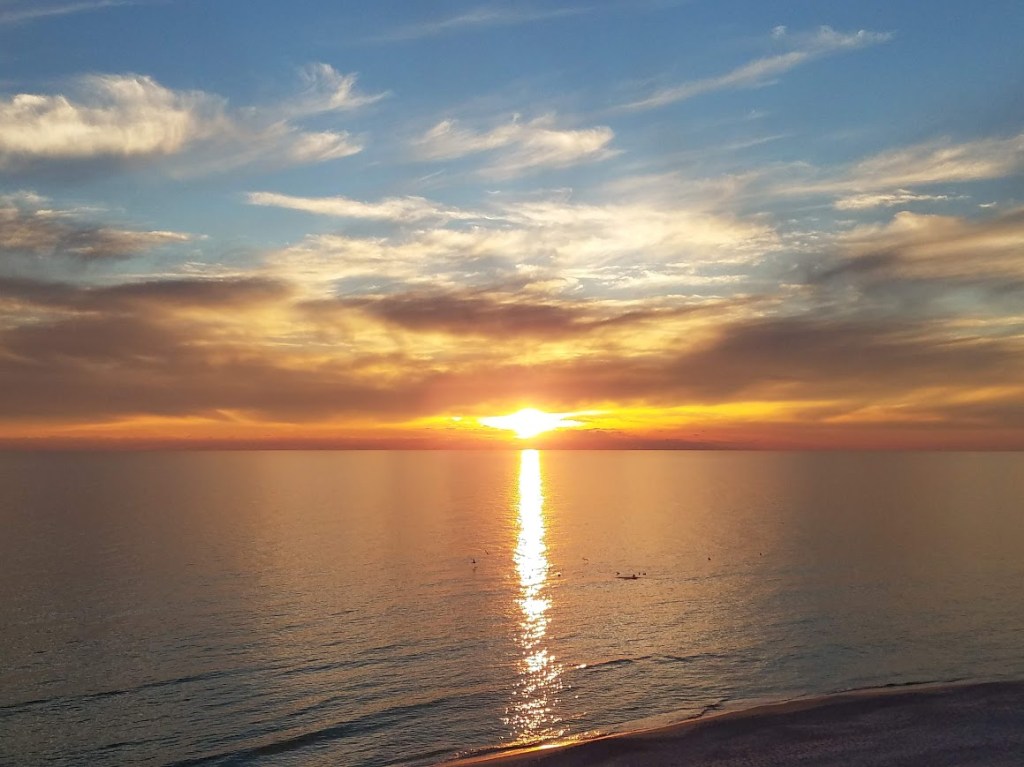
Perhaps nowhere is that more evident than along the waterfront. As the sun begins its descent toward the bay, the pace of the town seems to slow even further. Conversations stretch on. Walks become a little longer. The pressure to be somewhere else quietly fades away.
What makes places like Fairhope memorable isn’t a single attraction or landmark. It’s the feeling they leave behind. The reminder that not every moment needs to be productive and not every day needs to be rushed.
If Apalachicola is the fishing dock, Fairhope is the sunset—a place that encourages you to stop looking ahead for a moment and simply enjoy where you are.
Bay St. Louis, Mississippi
Some towns feel less like a destination and more like a place you discover along the way.
Bay St. Louis is one of those towns.
Set along Mississippi’s Gulf Coast, Bay St. Louis carries the kind of easygoing charm that makes you want to roll the windows down and take the long way there. The waterfront, the small-town atmosphere, and the slower pace all combine to create the feeling that you’ve stumbled across a place that never saw a reason to rush.
There is something refreshingly uncomplicated about Bay St. Louis. People gather near the water, conversations unfold without urgency, and the rhythm of the town feels tied to the coast rather than the clock. It’s easy to imagine spending an afternoon here without a plan, simply following whichever street looks interesting and seeing where it leads.
Like many of the best Southern towns, Bay St. Louis doesn’t demand your attention. It earns it quietly. Through the view of the water at the end of a street. Through the breeze coming off the Gulf. Through the feeling that you’re exactly where you’re supposed to be, even if you weren’t planning to stop.
If Fairhope is the sunset, Bay St. Louis is the coastal road—the stretch of highway where the music sounds a little better, the scenery makes you slow down, and the journey becomes just as memorable as the destination.
Ocean Springs, Mississippi
Some Saturday afternoons are less about where you are and more about who you’re with.
That’s what Ocean Springs feels like.
Located along Mississippi’s Gulf Coast, Ocean Springs has built a reputation as a town where community still matters. The streets are walkable, local businesses thrive, and there is an energy that feels both creative and relaxed. It is the kind of place where people seem genuinely happy to spend time together.
What makes Ocean Springs stand out is its sense of connection. Visitors quickly notice that people gather here naturally. Friends meet for lunch and stay longer than planned. Conversations spill onto sidewalks and patios. The day unfolds at an easy pace, with no real pressure to move on to the next thing.
There is a warmth to Ocean Springs that goes beyond its coastal location. It feels welcoming in the way small Southern towns often do, where a familiar face is never far away and a casual conversation can easily become the highlight of the afternoon.
If Bay St. Louis is the coastal road, Ocean Springs is the local hangout—the place where Saturday afternoon stretches into the evening because the company is good, the conversation is easy, and nobody is in a hurry to leave.
Conclusion
Maybe that’s why these towns stay with us.
Not because of their waterfronts, historic buildings, or scenic views, but because they remind us of something we thought we had left behind.
A Saturday afternoon road trip. The windows down. Blue skies overhead. Classic rock playing through the speakers. The smell of fresh-cut grass drifting through the car. No destination that couldn’t wait another hour. No reason to rush.
For a little while, life felt simple.
The truth is that most of us aren’t really searching for the perfect town. We’re searching for the feeling those towns give us. The feeling of slowing down. Of spending time with friends. Of sitting on a porch, walking beneath old oak trees, watching a sunset, or taking the long way home simply because the day was too beautiful to end.
These towns remind us that some places stay with us long after we’ve left.
The good news is that those places still exist.
They’re tucked along the coast, hidden beneath Spanish moss, gathered around town squares, and waiting at the end of quiet roads throughout the South. They may be a little harder to find than they once were, but they’re still there.
And every now and then, if you’re lucky, you’ll roll the windows down, hear an old song on the radio, and find yourself back in one of those Saturday afternoons that never really left you after all.