Where history, nature, and the present all seem to share the same branches.
A Canopy of History
The first thing I noticed about Savannah wasn’t a landmark.
It wasn’t a historic home, a famous square, or one of the restaurants people tell you not to miss. It was the Spanish moss.
It seemed to hang from everything.
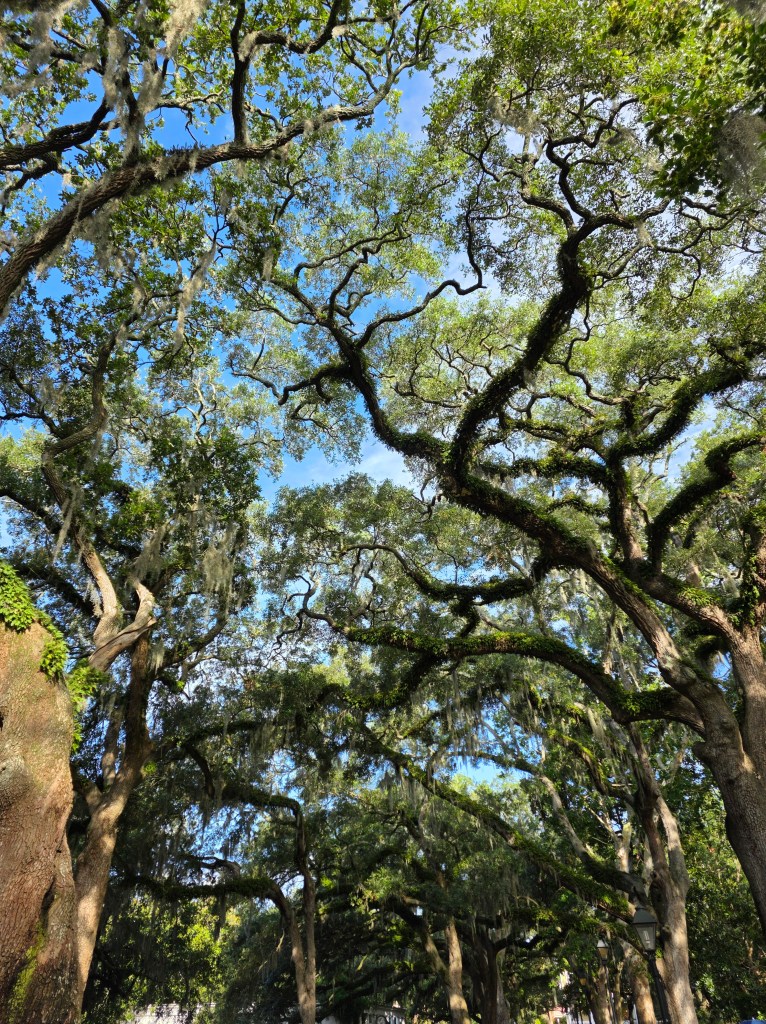
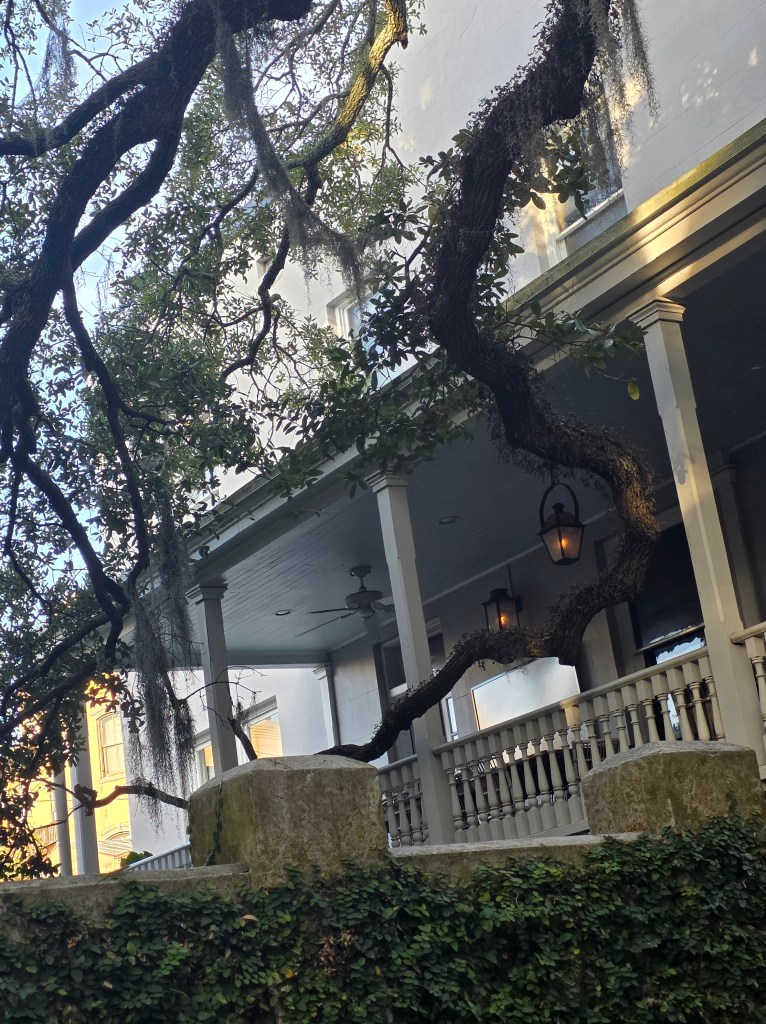
Some strands drifted from sprawling oak branches like old gray curtains. Others stretched across entire streets, creating a canopy that made it feel as though the city existed beneath a ceiling of living history. Before long, I found myself looking up more often than I was looking ahead.
And every time I did, there was something worth seeing.
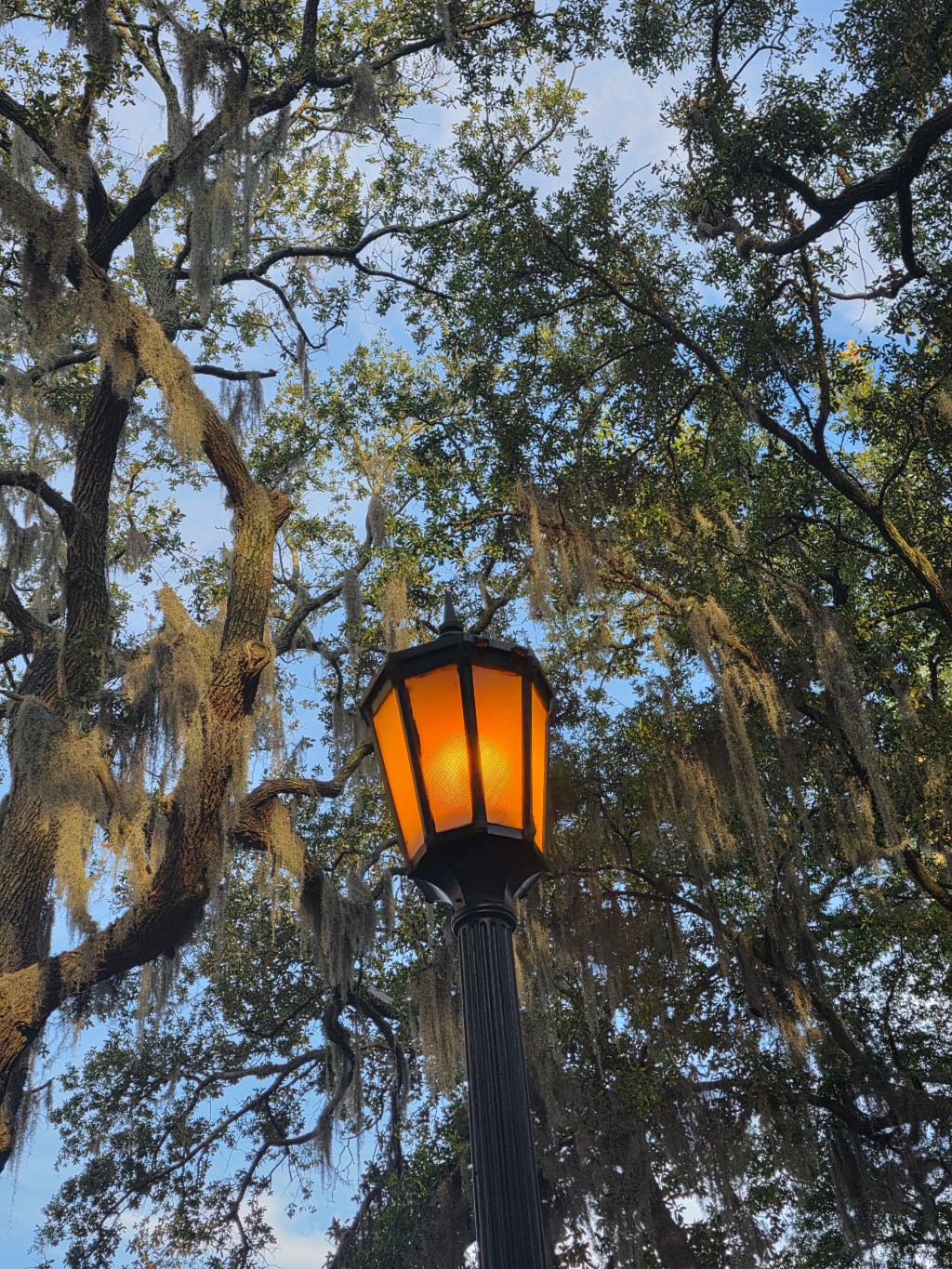
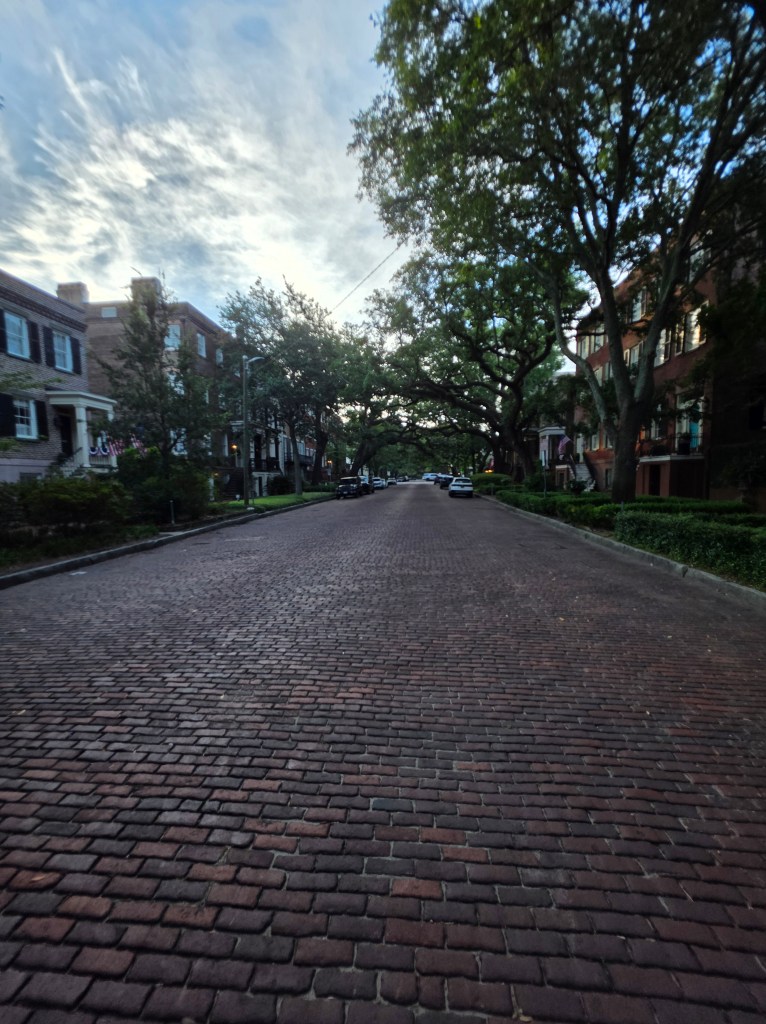
The longer I spent in Savannah, the more I realized the Spanish moss wasn’t simply decorating the city. It was part of its identity. The trees framed nearly every scene — historic homes, brick sidewalks, wrought-iron balconies, and even the old gas lamps that still glow beneath the branches. It was impossible to separate the city from the canopy above it.
What struck me most was how old it all felt.
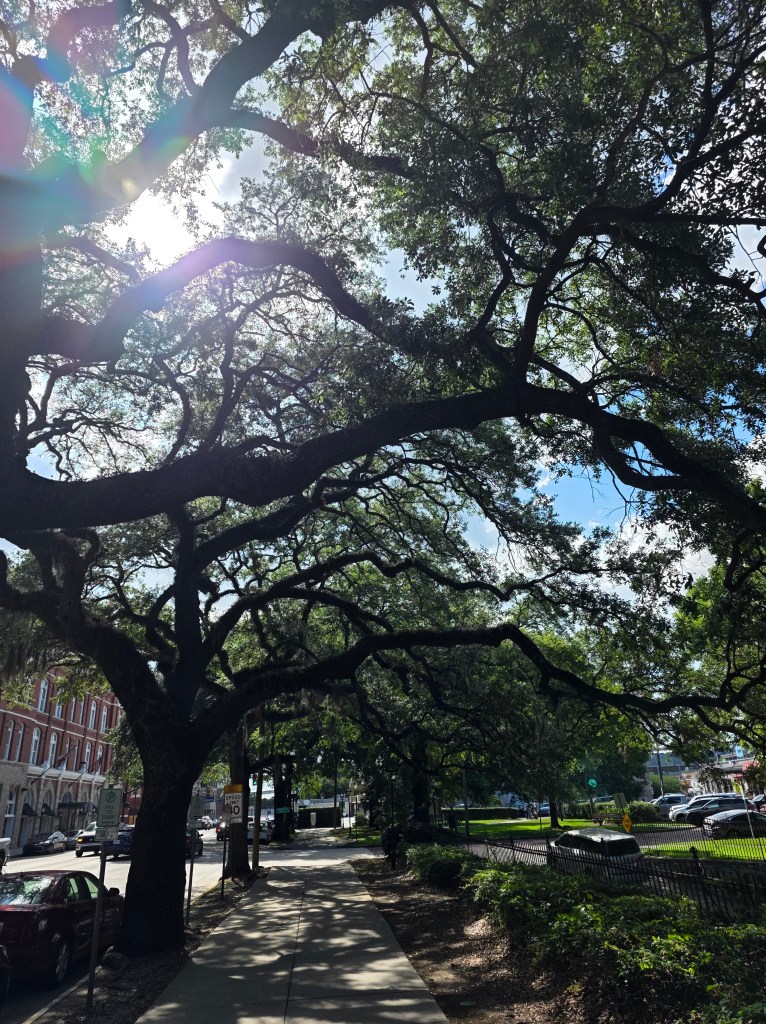
Not old in a neglected way. Old in a way that reminded you that some things don’t need to be replaced to remain beautiful. The oaks seemed to have been standing watch for generations, their branches stretching over streets that have seen centuries of change. Beneath them, life continues as it always has. People walk their dogs, visitors explore the squares, and traffic moves through the city. Above it all, the trees remain.
Standing beneath those branches, it felt like history and nature had somehow merged with the present. The city continues to move forward, but the canopy overhead seems content to exist outside the rush of modern life. In a world that often feels focused on what’s next, there was something comforting about being surrounded by things that have simply endured.
For me, that’s where Savannah began. Not at street level, but above it. Looking up into the branches and realizing that sometimes the character of a place isn’t found in its attractions. Sometimes it’s found in the things that have been quietly watching over it all along.
The Things You Miss When You’re Looking Ahead
Once I started looking up, I began noticing things I probably would have walked right past otherwise.
The Spanish moss may have been what first caught my attention, but it wasn’t long before I found myself paying closer attention to everything around it.
There were gas lamps hanging beneath the branches, their warm glow appearing almost unchanged from another era. Wrought-iron balconies overlooked quiet streets. Front porches sat shaded beneath the canopy of oaks, inviting people to slow down for a while. Even the brick sidewalks and historic architecture seemed easier to appreciate once I stopped rushing from one destination to the next.
It’s easy to experience a city like a checklist. See the landmark. Take the picture. Move on to the next stop.
Savannah didn’t feel built for that.
The city seemed to reward wandering. Some of my favorite moments weren’t planned at all. They happened while walking down a side street, noticing sunlight filtering through the branches, or stopping to admire details that might have gone unnoticed in a faster-paced place.
The more time I spent there, the more I realized that Savannah’s character isn’t found in any single attraction. It’s found in the collection of small things that work together to create a feeling. The trees. The ironwork. The porches. The brick streets. The shadows. The light.
Individually, they might not seem remarkable. Together, they create a place that feels unlike anywhere else.
And maybe that’s why Savannah stayed with me. Not because of one famous landmark, but because slowing down allowed me to notice the details that make the city what it is.
Savannah Doesn’t Seem In A Hurry
The longer I spent walking through Savannah, the more I noticed something that had nothing to do with architecture, history, or even the Spanish moss.
The city didn’t seem to be in a hurry.
That’s not to say people weren’t working, driving, or going about their day. Life was moving forward just like it does everywhere else. But Savannah felt comfortable with its pace. It wasn’t trying to become something else. It wasn’t racing toward the future or trying to leave its past behind.
It simply seemed content being Savannah.
Maybe that’s part of what makes the city so memorable. The massive oaks have stood watch over the streets for generations. The historic homes remain. The squares continue to provide places for people to gather, rest, and linger for a while. Even the details that catch your eye—the gas lamps, the ironwork, the brick streets—feel like reminders that not everything needs to be replaced in order to remain valuable.
Standing beneath those sprawling branches, I found myself slowing down too.
Not intentionally at first. It just happened.
I spent more time wandering than rushing. More time noticing than planning. More time looking around than looking at my phone. In a world that constantly pushes us toward the next thing, there was something refreshing about being in a place that seemed perfectly comfortable where it was.
Maybe that’s why Savannah stays with so many people after they leave.
The city offers plenty to see, but what I remember most isn’t a specific attraction. It’s the feeling of walking beneath those trees, looking up through the canopy, and being reminded that slowing down isn’t always a bad thing.
Sometimes it’s exactly what we need.
Before You Leave Savannah, Look Up
Most visitors will remember Savannah for its historic homes, its squares, and its restaurants. They’ll remember River Street, the architecture, and the stories that seem to exist around every corner.
I will too.
But when I think about Savannah, the first images that come to mind aren’t found at street level.
They’re above me.
The Spanish moss swaying beneath centuries-old oaks. Sunlight filtering through the branches. Gas lamps hanging beneath a canopy that seems to belong to another time. The feeling that history, nature, and the present somehow found a way to share the same space.
It’s a simple thing, really.
Looking up.
Yet it changed the way I experienced the city.
It slowed me down. It made me notice details I might have otherwise missed. It reminded me that some places aren’t meant to be rushed through. They’re meant to be wandered through, appreciated, and experienced at their own pace.
Savannah feels like one of those places.
Long after the trip is over, I’ll remember the trees, the shadows, and the view through the branches toward a patch of blue Georgia sky.
And if you ever find yourself walking beneath those oaks, take a moment to do the same.
Look up.
You might discover that’s where the best part of Savannah has been all along.