
Some are written in stone. Others live on in the telling.
The Questions That Follow You Home
I didn’t visit Savannah looking for forgotten stories.
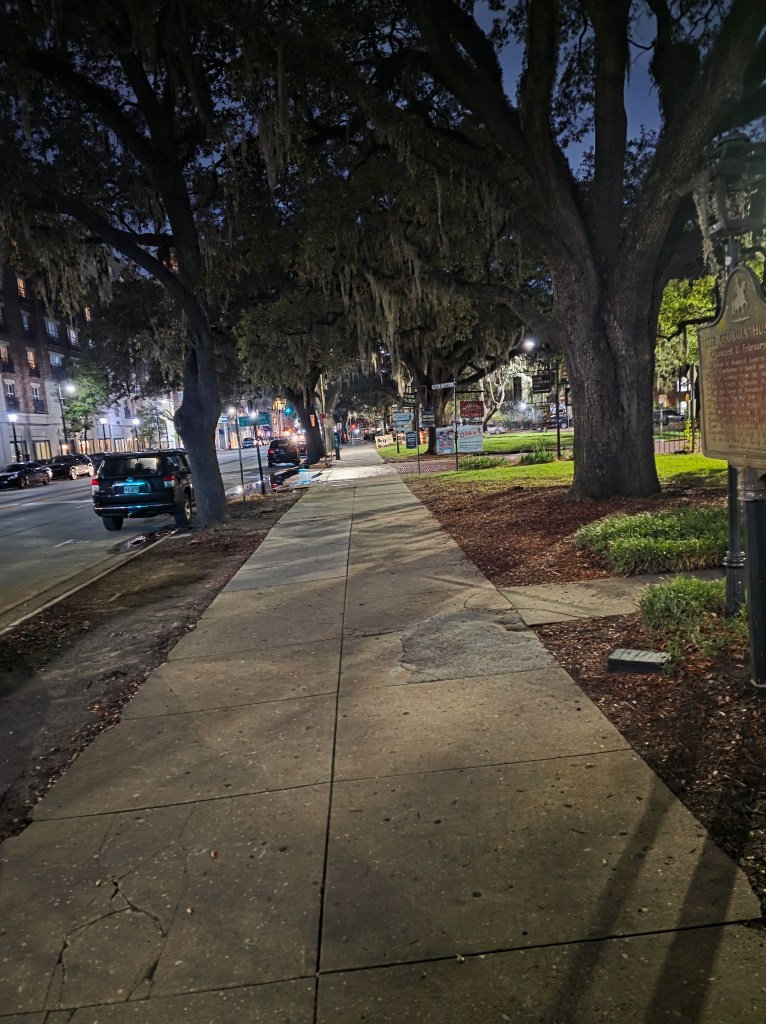
Like most visitors, I spent my time admiring the things the city is known for—historic homes, shaded squares, Spanish moss, and streets that seem untouched by time. Most of my photographs reflected that. Oak trees stretching toward the sky. Gas lamps glowing beneath the branches. Quiet corners that felt a little slower than the rest of the world.
Then I found myself wandering through one of Savannah’s historic cemeteries.
At first, it was the atmosphere that caught my attention. The same moss-covered oaks that line the city’s streets stood watch over weathered monuments and stone markers. Sunlight filtered through the branches. Everything felt quiet, even though the city was only a short distance away.
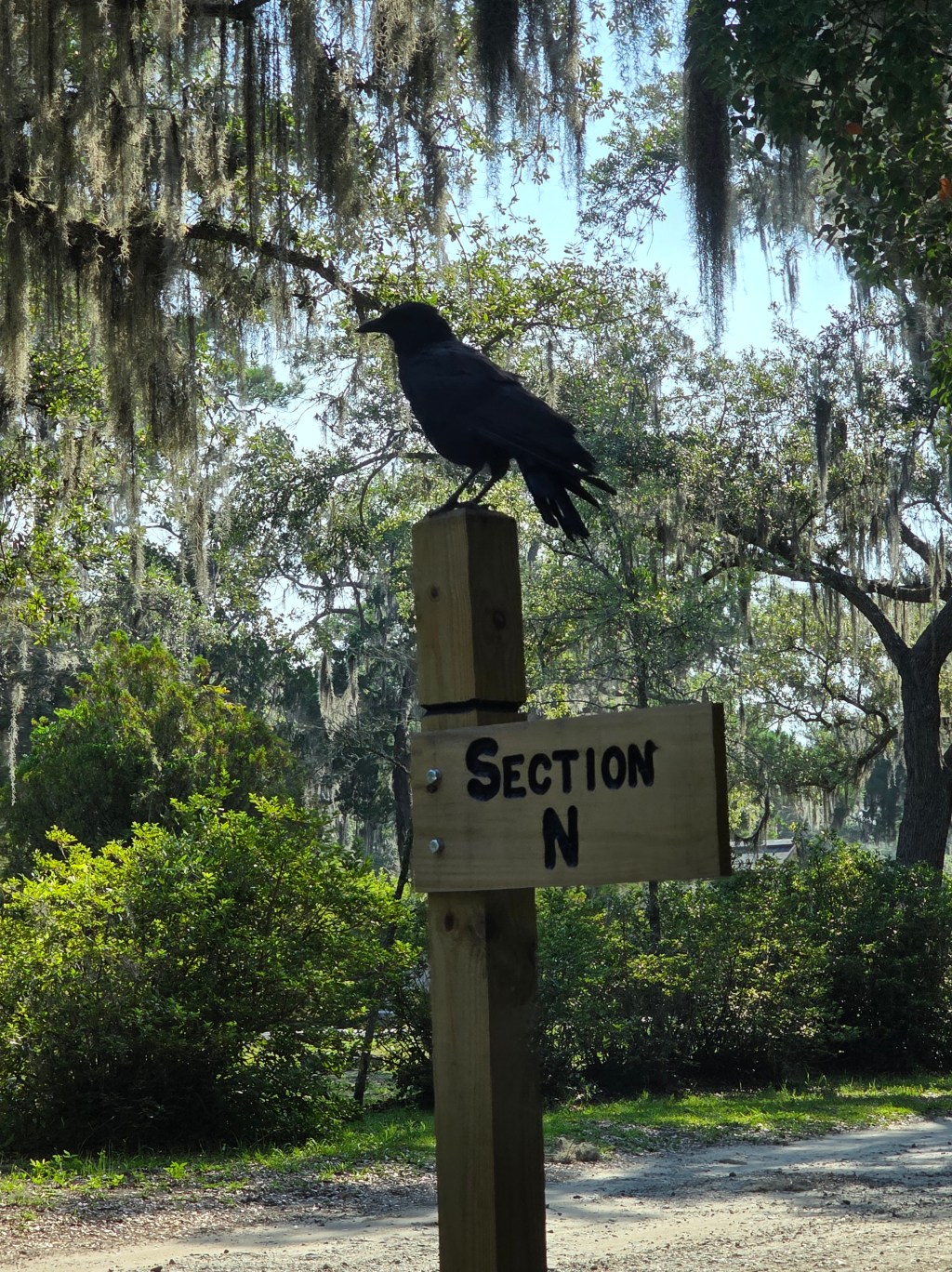
That’s when I noticed a crow perched on a wooden sign.
It wasn’t the most beautiful photograph I took during the trip. It wasn’t even the most interesting thing in the cemetery. But there was something about the scene that stayed with me long after I left. The crow. The moss. The sign marking a section of ground filled with people I knew nothing about.
The photograph made me curious.
Who were the people buried here? What stories had been forgotten? Which ones were still being told?
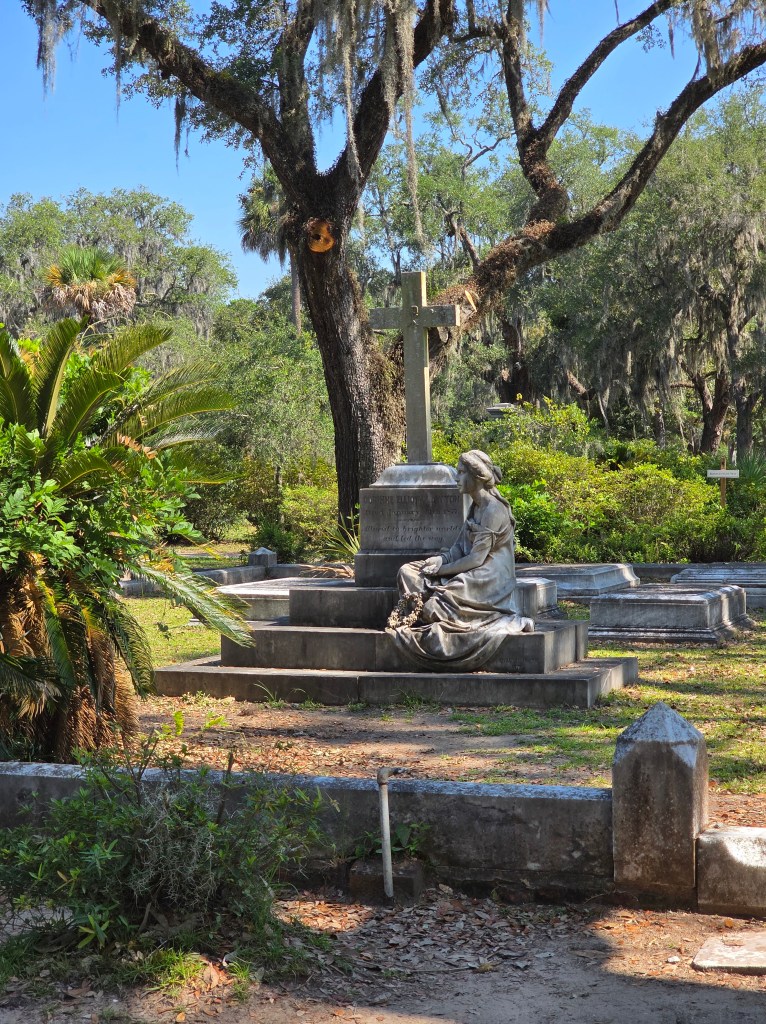
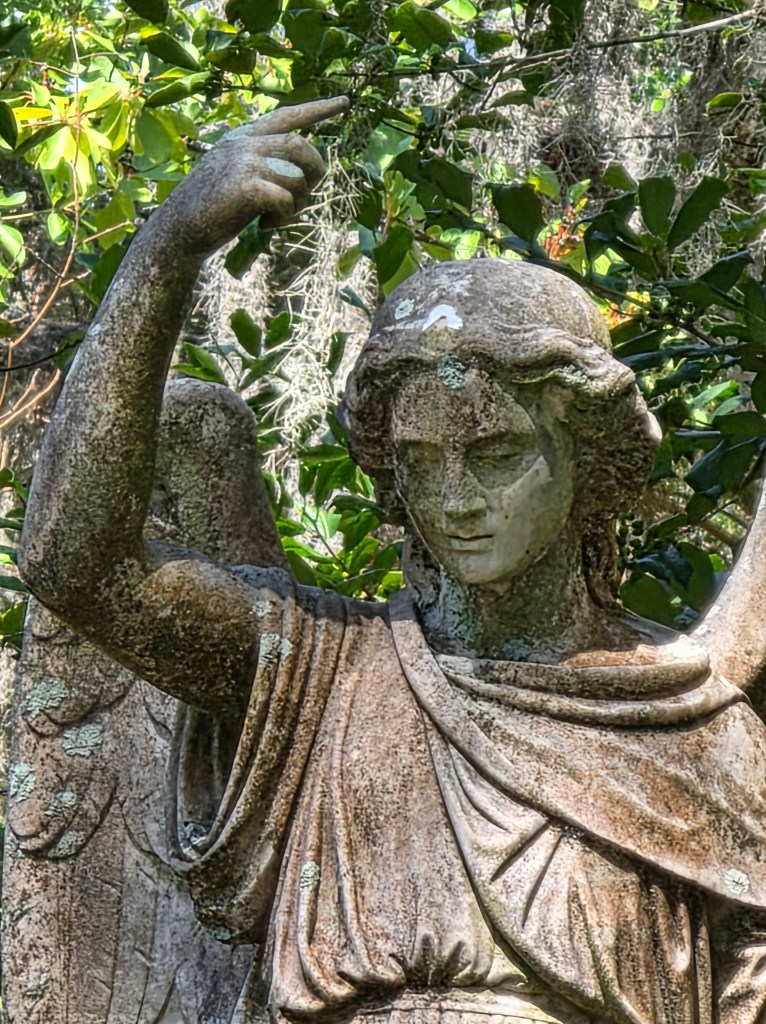
The longer I walked through the cemetery, the more I realized that every monument, every statue, and every name seemed connected to a story waiting to be discovered.
Some were written in stone.
Others survived because someone kept telling them.
The Names We Don’t Know
One monument in particular caught my attention.
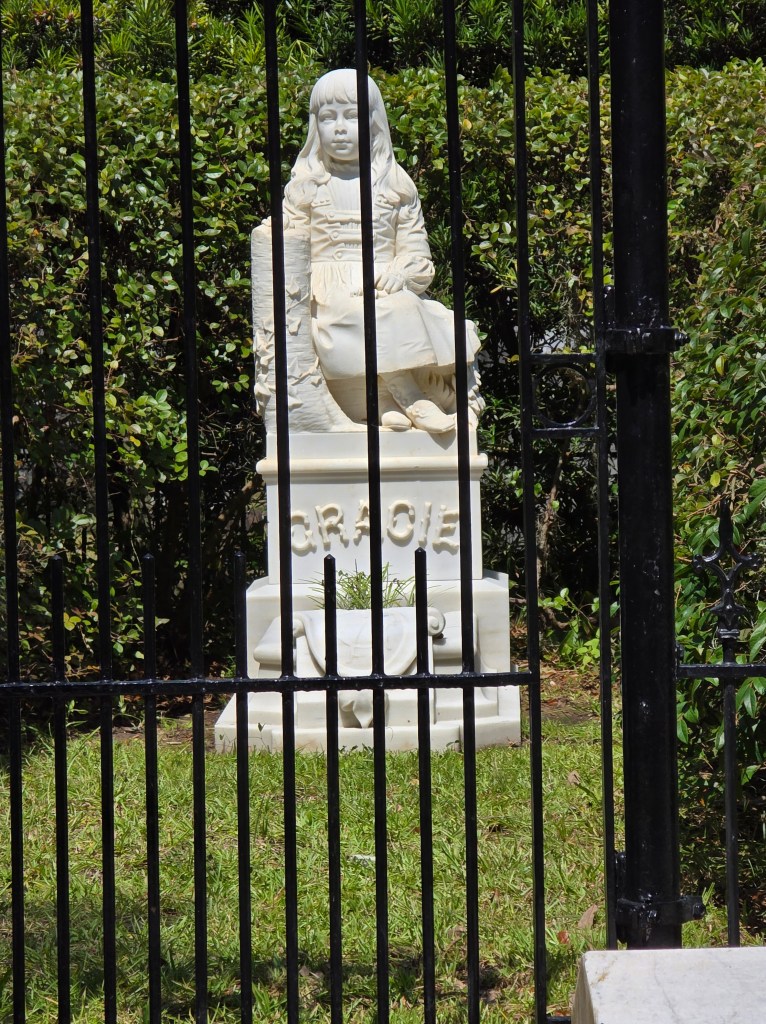
Behind a wrought-iron fence sat a life-sized marble statue of a young girl named Gracie. Unlike many of the larger monuments scattered throughout the cemetery, hers felt deeply personal. There was no towering obelisk or elaborate display. Just a child seated quietly in stone.
At first, she was simply another name among many.
Then I learned her story.
Gracie Perry Watson died in 1889 at only six years old. Before her death, she was known for entertaining guests at Savannah’s Pulaski House Hotel with songs and dances. By all accounts, she left an impression on the people who met her. After she died of pneumonia, her grieving parents commissioned a life-sized marble statue in her likeness.
More than a century later, visitors still stop to see her.
Standing there, I found myself thinking about how easily names fade with time. Most of us will never know the vast majority of people buried in places like Bonaventure Cemetery. We walk past monuments and markers without knowing who they were, what they cared about, or what their lives looked like.
Yet every once in a while, a story survives.
A six-year-old girl who liked to sing and dance.
A family that loved her enough to preserve her memory in stone.
Strangers who still pause to learn her name more than 130 years later.
The statue doesn’t tell the whole story.
But it tells enough.
Enough to remind us that every marker in a cemetery once belonged to someone who laughed, worried, dreamed, worked, and mattered to the people around them.
And the more I walked through the cemetery, the more I began to wonder about the stories attached to the other names I didn’t recognize.
Some Stories Refuse To Disappear
Not every story in Bonaventure Cemetery is preserved through statues or marble monuments.
Some survive through rumor.
Some survive through local legends.
And some survive because people simply refuse to stop talking about them.
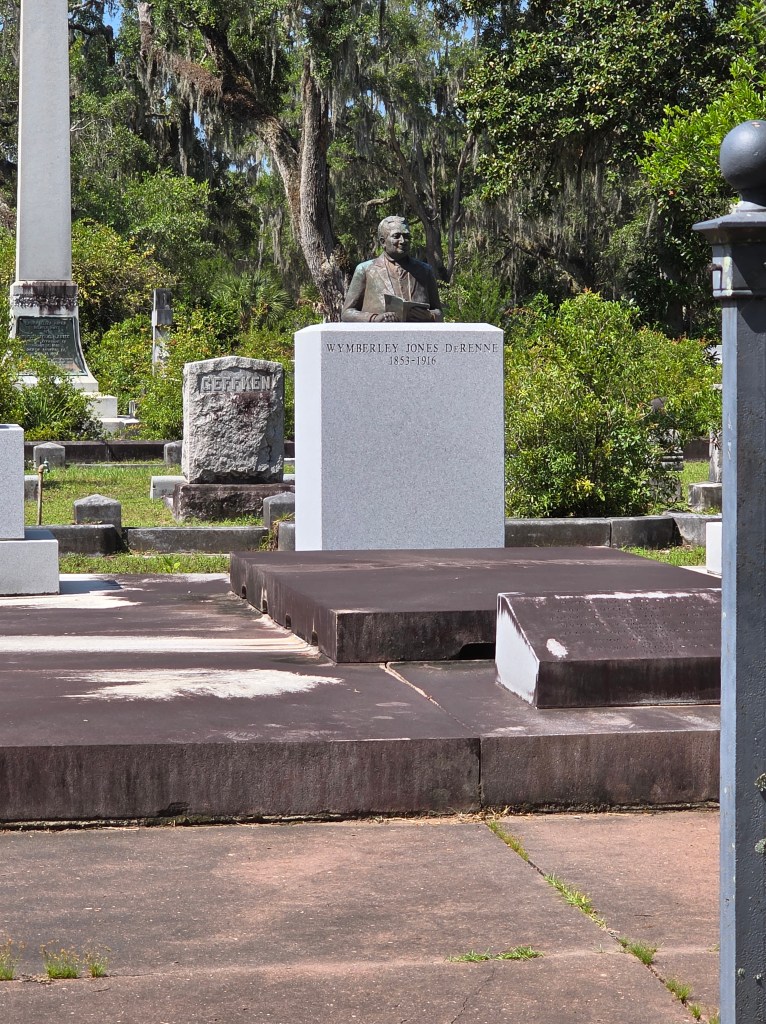
One monument that caught my attention belonged to Wymberley Jones DeRenne. At first glance, it didn’t seem much different from many of the other memorials scattered throughout the cemetery. Like most visitors, I walked past it without knowing much about the man buried there.
Then I started reading.
DeRenne was a prominent Savannah figure, and over time stories began to gather around his monument. According to local lore, an underground altar exists beneath the structure. There are even rumors of hidden treasure concealed somewhere below.
Whether those stories are true is almost beside the point.
What fascinated me wasn’t the possibility of treasure.
It was the fact that people are still telling the story at all.
More than a century after his death, DeRenne’s name continues to spark curiosity. Visitors stop. Questions get asked. The story gets passed along to someone new.
In a strange way, that may be one of the most enduring forms of remembrance.
Most of us won’t leave behind statues. Few of us will have monuments that attract visitors decades from now. Yet stories have a way of surviving when facts alone cannot. A rumor becomes a local legend. A family story becomes community history. One generation tells the next, and somehow a person remains part of a place long after they’re gone.
Walking through Bonaventure, I realized that every cemetery contains two histories.
There’s the one written on the monuments.
And there’s the one people continue telling.
Sometimes the second lasts even longer than the first.
What Places Remember
By the time I left Bonaventure Cemetery, I realized I wasn’t thinking about monuments anymore.
I was thinking about stories.
A little girl who entertained hotel guests with songs and dances. A prominent Savannah figure whose monument inspired rumors of hidden treasure. Names carved into stone that meant nothing to me when I arrived but felt different once I learned even a small part of their story.
The cemetery reminded me of something that applies far beyond Savannah.
Every place has layers.
Most of us only experience the surface. We visit a town, walk through a neighborhood, stop at a landmark, and move on. We see what exists today without always considering the people who helped shape it.
But the longer you spend in a place, the more those layers begin to reveal themselves.
A street becomes more than a street.
A building becomes more than a building.
A cemetery becomes more than a collection of monuments.
They become reminders that countless lives unfolded there long before we arrived.
That’s one of the reasons I enjoy traveling to older places. Not because they’re frozen in time, but because they’re filled with evidence of the people who came before us. Their decisions, successes, failures, celebrations, and losses helped create the places we experience today.
The stories aren’t always obvious.
Sometimes they’re preserved in marble.
Sometimes they’re passed from one generation to the next.
Sometimes they’re hidden behind a weathered monument, a name on a marker, or a rumor that refuses to disappear.
You just have to be willing to notice them.
The Stories That Stay
When I think back on my visit to Bonaventure Cemetery, I don’t immediately remember a specific monument or marker.
I remember the questions.
Who was Gracie?
What parts of her life made people remember her more than a century later?
How much truth is hidden inside the stories surrounding DeRenne’s monument?
How many other stories exist in places like this that I’ve never taken the time to notice?
It all started with a crow perched on a sign.
A simple photograph that made me stop and look a little closer.
That’s the thing about old places. They have a way of rewarding curiosity. The longer you linger, the more you realize that history isn’t confined to museums or textbooks. It’s woven into the landscape, preserved in monuments, carried forward through stories, and waiting in places most people walk past without a second thought.
Savannah is full of beautiful things. The oak trees. The Spanish moss. The historic homes and quiet squares.
But some of the most memorable things I found weren’t on any travel itinerary.
They were the stories.
Some were written in stone.
Others lived on in the telling.
And all of them reminded me that every place has a story if you’re willing to stop long enough to listen.
 Deedlebay
Leave a comment